Beautyworld Dubai 2026 takes place from 6–8 October at the Dubai World Trade Centre. The event, known in previous editions as Beautyworld Middle East, brings together fragrance, cosmetics, skincare, beauty technology, packaging and supply-chain specialists from across the global beauty industry.
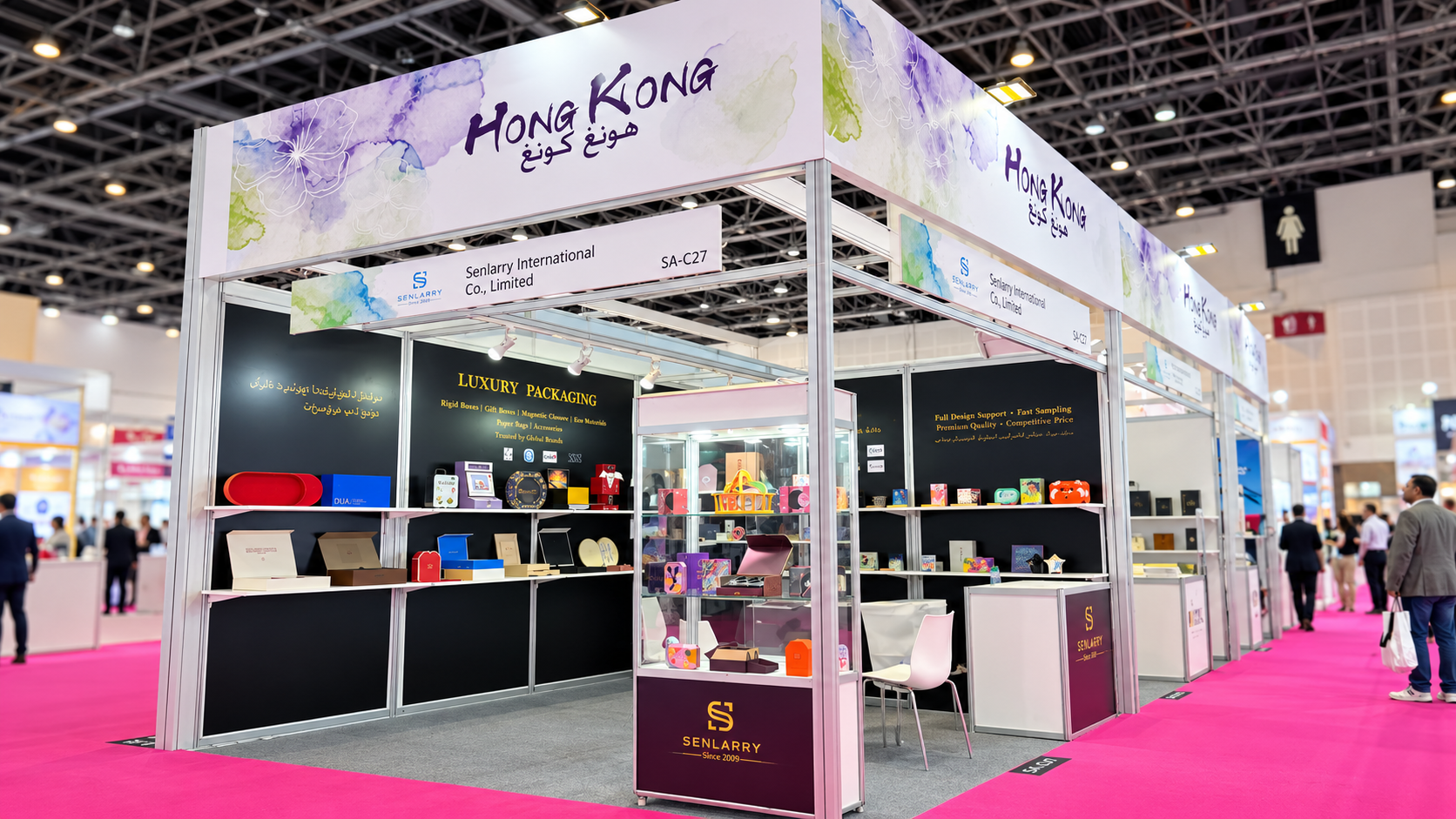
Senlarry Packaging is not exhibiting at this year’s show. However, after participating in the 2025 edition and working with fragrance and beauty brands across the Middle East, we continue to follow the market closely. The opening of this year’s event is a useful moment to look beyond short-lived visual trends and consider what beauty brands increasingly need from their packaging partners.
The official 2026 programme includes Finished Fragrances, Cosmetics & Skincare, Supply Chain & Services and the dedicated prestigepack section. The organiser describes prestigepack as a showcase for craftsmanship, innovative design and sustainable thinking. That combination reflects an important change in the market: strong packaging can no longer be judged by appearance alone.
For brands planning a new fragrance, beauty collection, PR kit or seasonal gift set, the most relevant packaging trends are becoming more practical, more integrated and more closely connected to production reality.
Fragrance is an emotional product. Before a customer experiences the scent, the packaging has already created expectations about its character, price and intended audience.
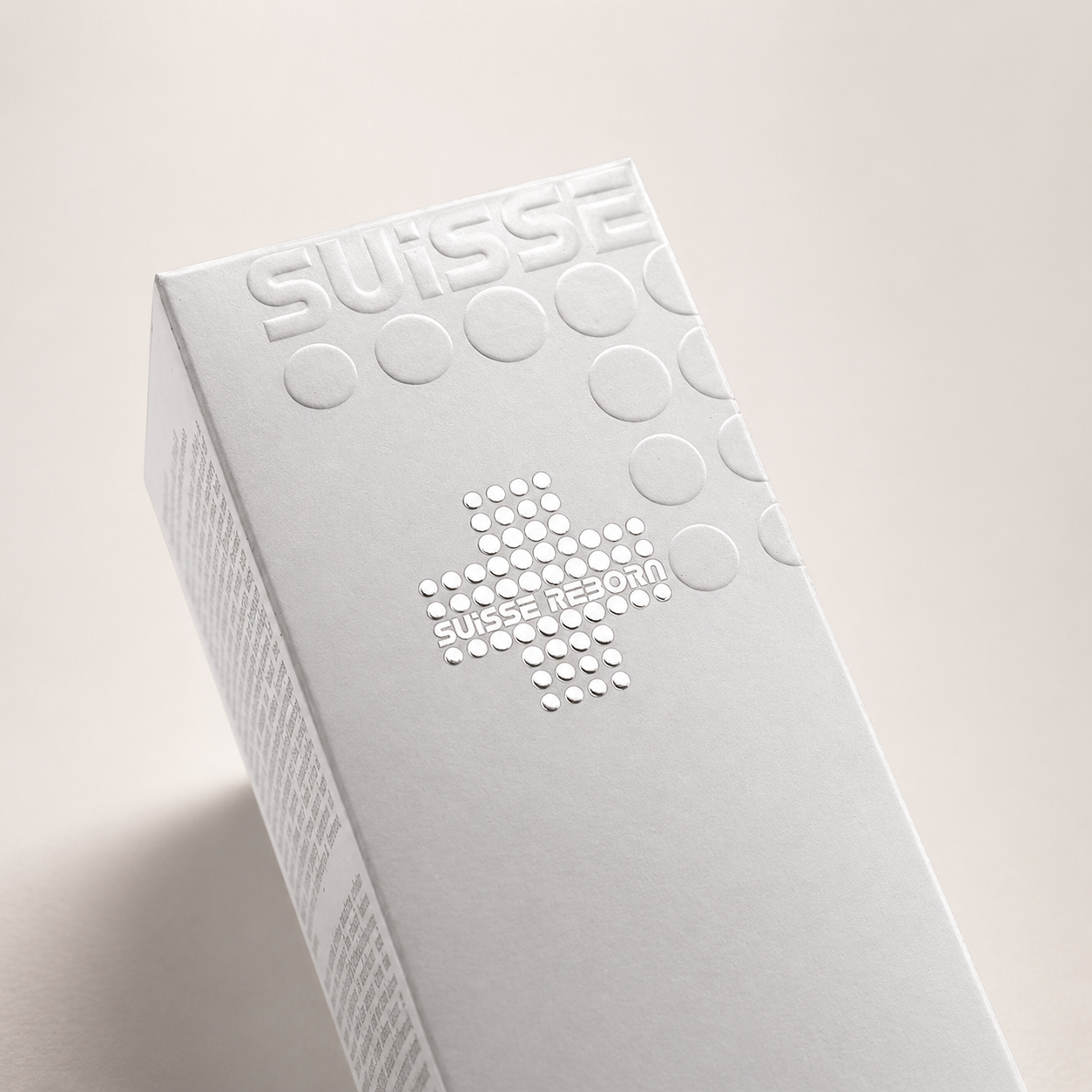
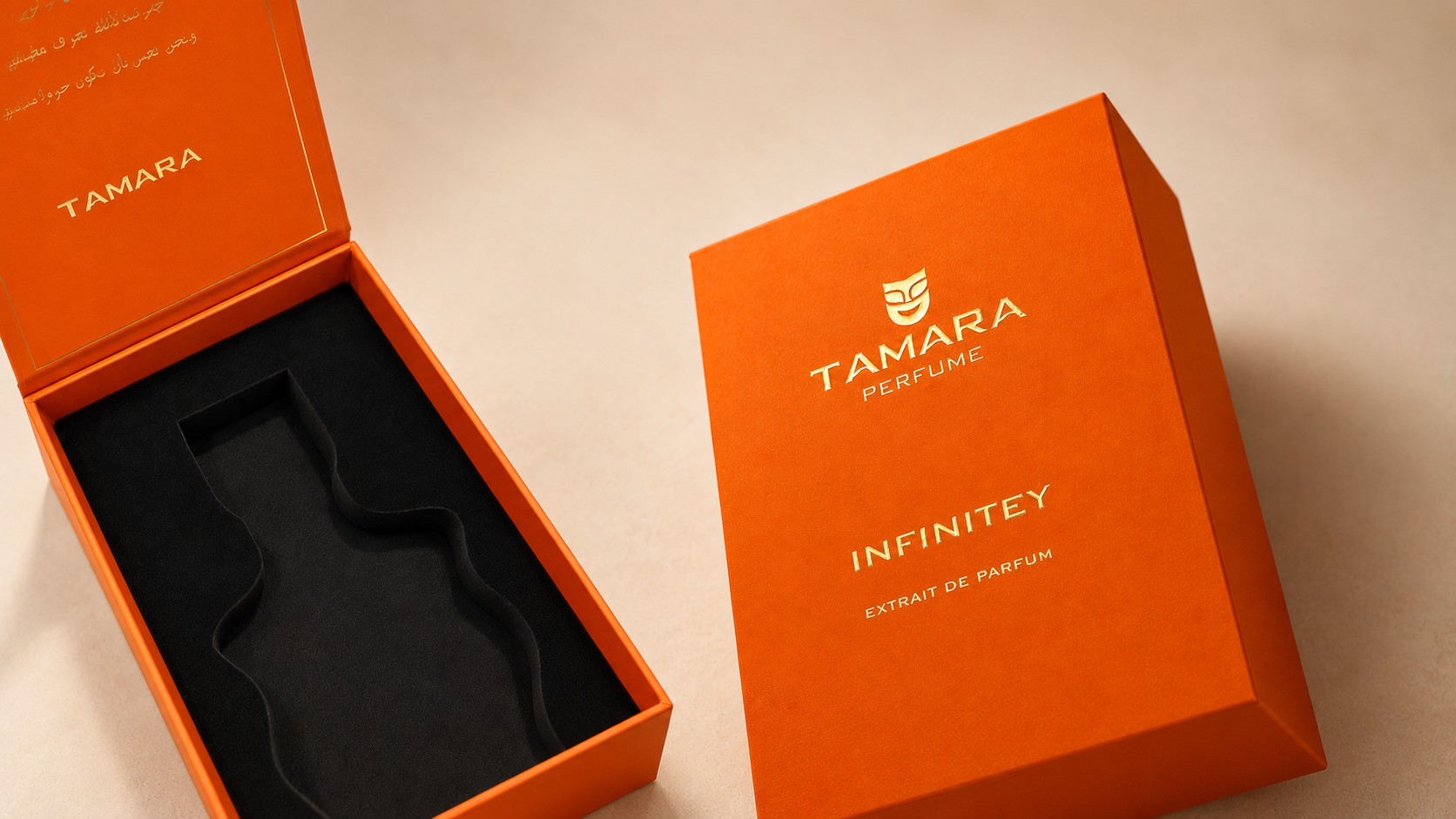
This is especially important for niche fragrance brands and Middle Eastern perfume houses, where presentation often carries a strong sense of ritual. A rigid perfume box, drawer box or double-door structure can control how the bottle is revealed. Textured paper, restrained foil stamping, embossing or a carefully placed logo can communicate more than several decorative elements competing for attention.
The opportunity is not simply to make the box more elaborate. It is to make the structure support the fragrance story. A bold, architectural bottle may need a clean presentation that gives it space. A discovery set may need an orderly arrangement that makes several scents easy to understand. A Ramadan or Eid collection may require a stronger sense of gifting and occasion.
Good custom fragrance packaging begins with the product and the brand narrative—not with a list of finishes.
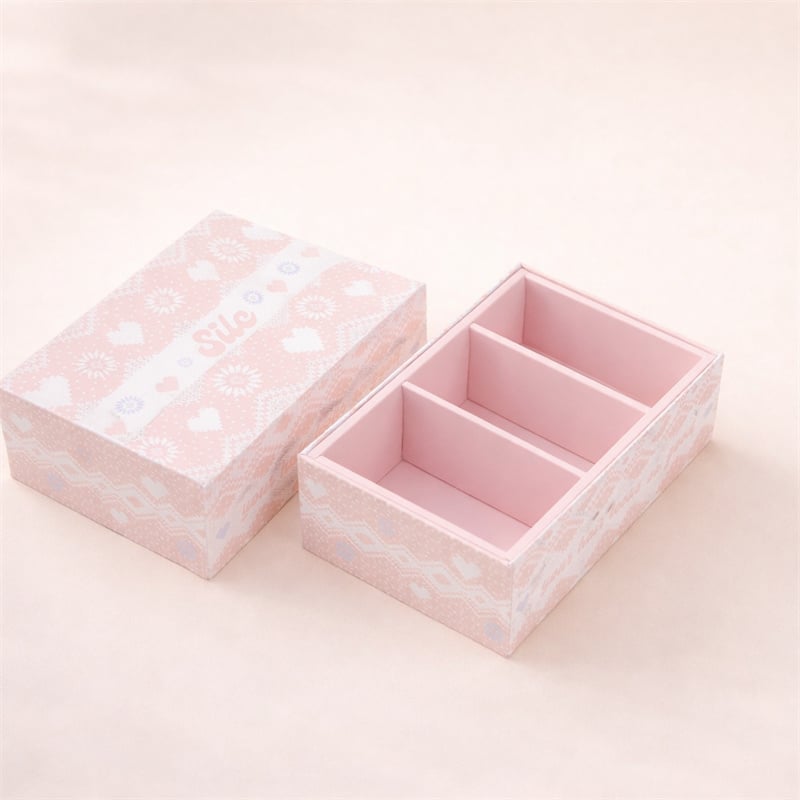
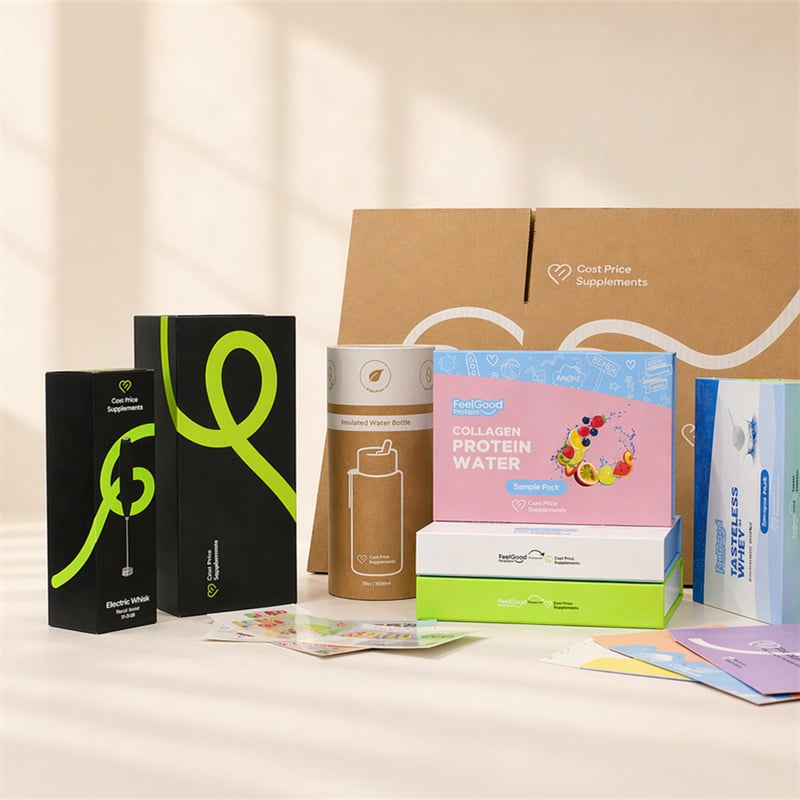
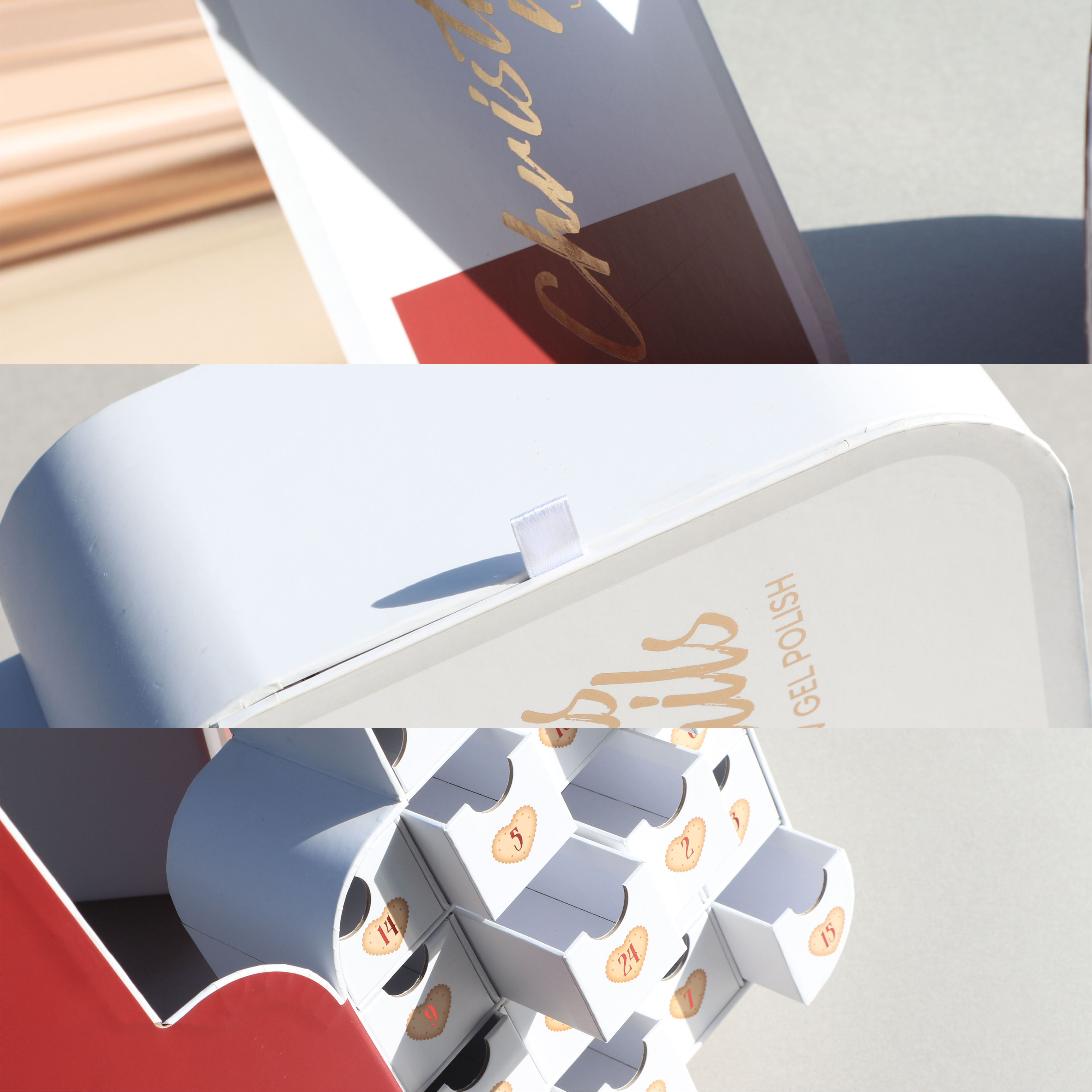
Beauty brands continue to look for packaging that feels recognisable in retail displays, launch events and social content. Book-style boxes, drawers, layered reveals and sculptural openings can help a product stand apart from standard formats.
However, a complex structure is only valuable when it improves presentation, protection or interaction. Unnecessary layers may increase material use, assembly time, packing costs and shipping volume without creating a better customer experience.
Before developing a special structure, brands should ask:
• Does the opening sequence support the campaign or product story?
• Can the structure be assembled and packed consistently at scale?
• Does it protect the product during international transport?
• Can unnecessary components or mixed materials be removed?
• Will the final pack still work within the project budget and launch schedule?
The strongest design is often the one that creates a clear moment of discovery with the fewest unnecessary elements.
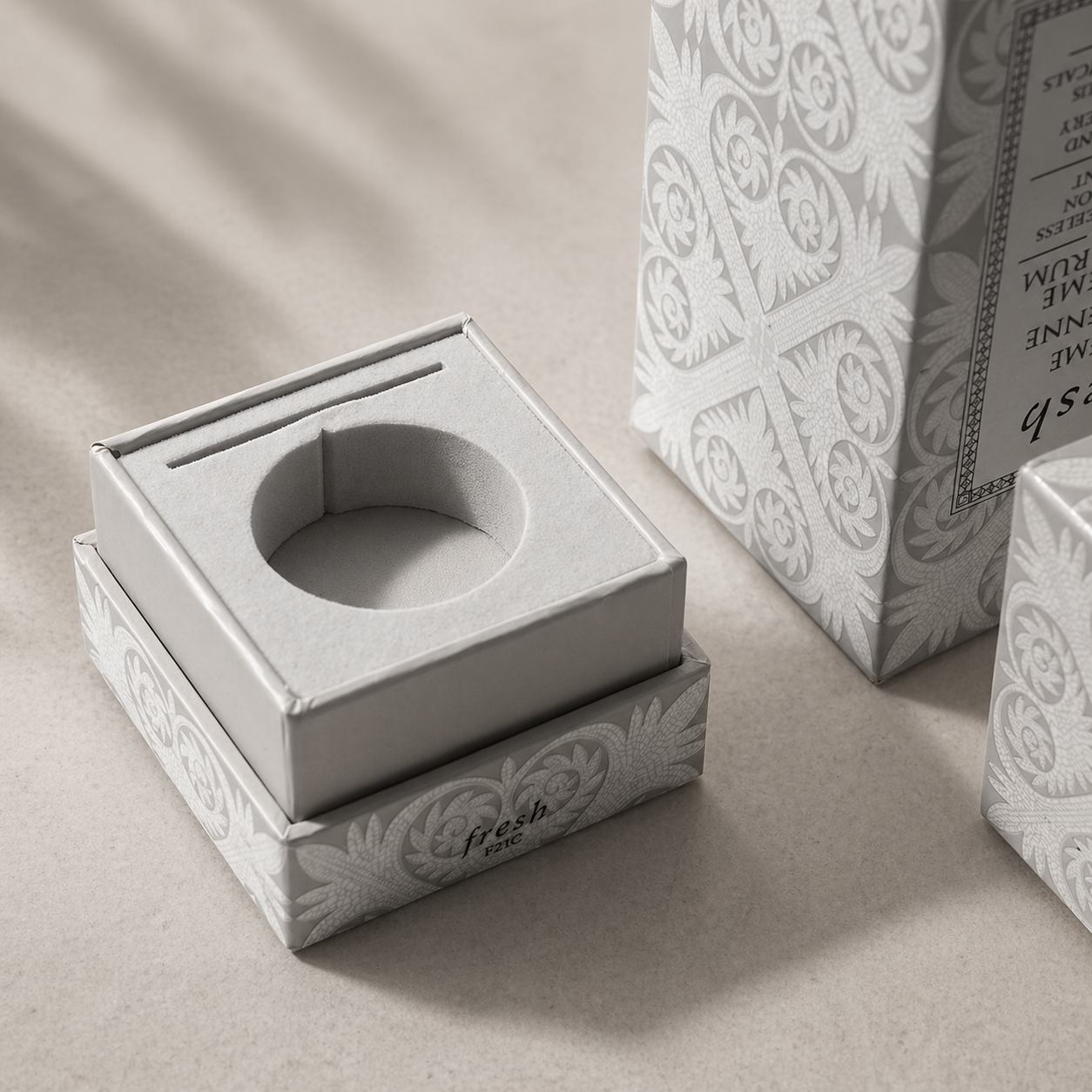
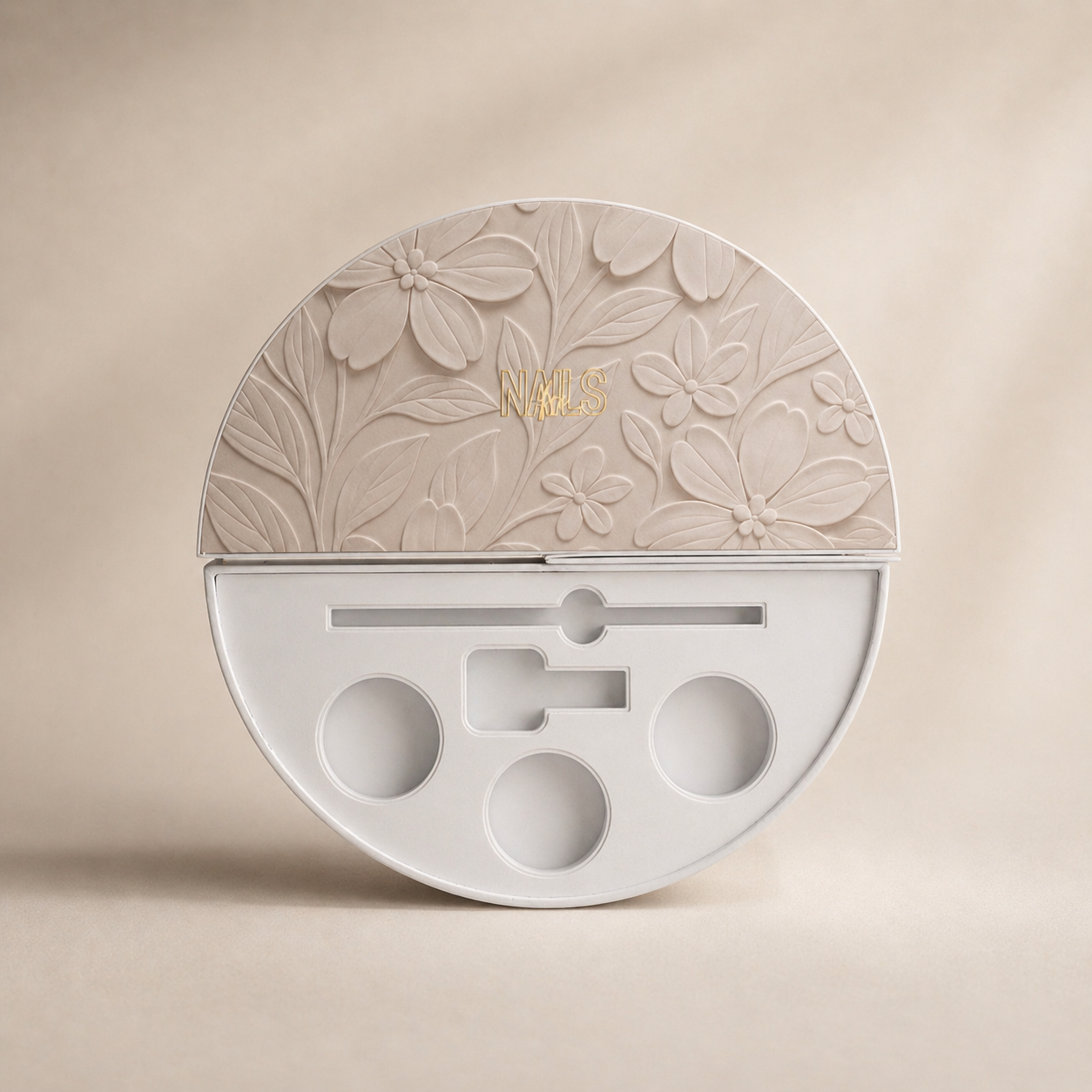
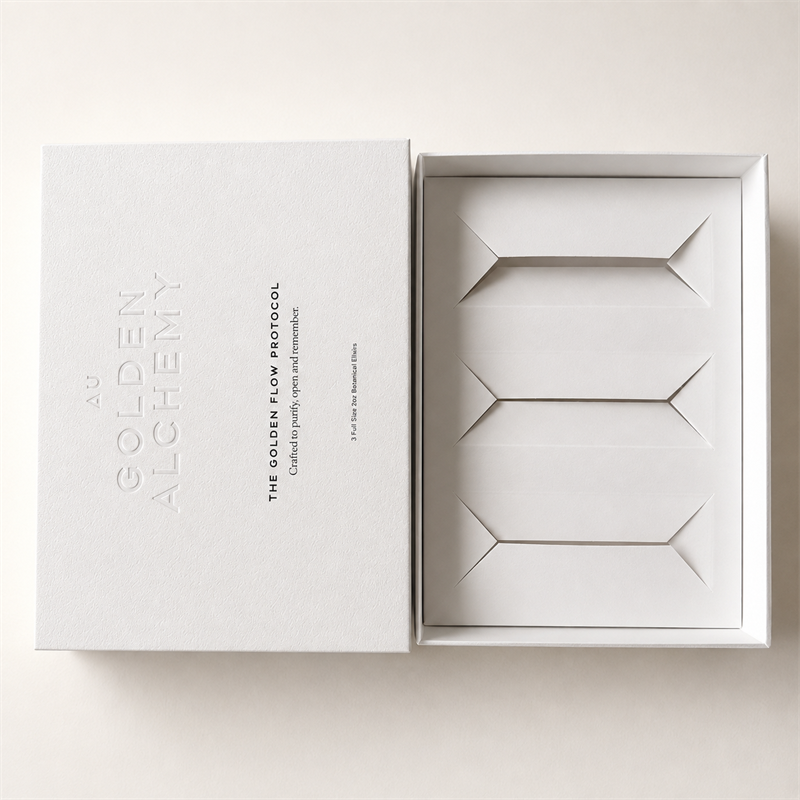
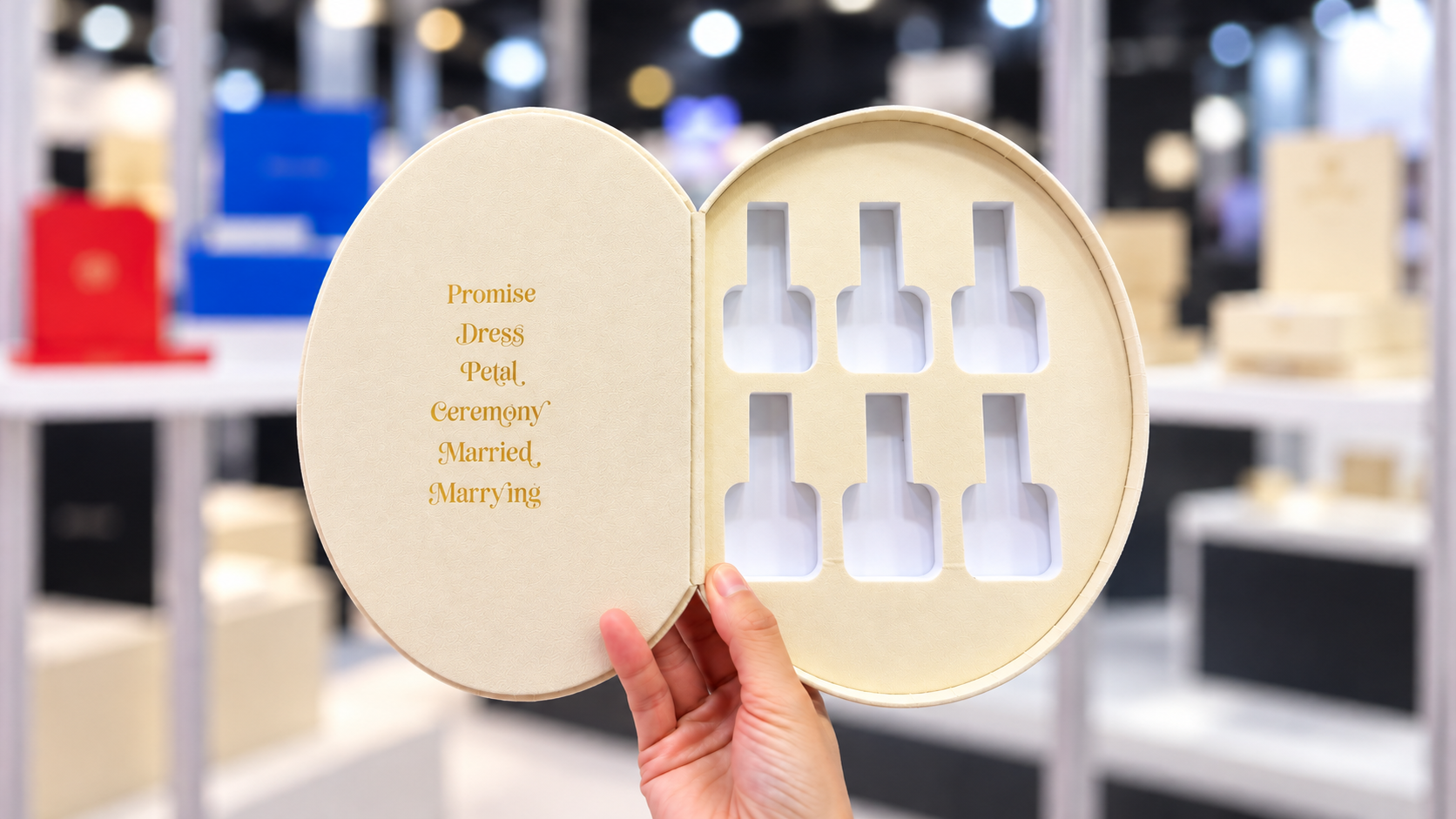
The insert is easy to overlook when the first discussion focuses on colour, paper and surface finish. In practice, it is one of the most important parts of beauty and perfume packaging.
Glass fragrance bottles, skincare jars, applicators and beauty devices vary significantly in shape, weight and fragility. A visually impressive box can still fail if the product moves, tilts or becomes difficult to remove.
Insert development should consider the actual product dimensions, weight distribution, transport conditions and intended unboxing experience. Depending on the project, options may include folded paperboard, moulded pulp, EVA or other engineered inserts. Each has different implications for presentation, cushioning, recyclability, cost and production.
This is why physical sampling remains essential. A structural sample allows the brand and packaging team to test product fit, opening resistance, component alignment and basic functionality before mass production. A rendered image can show the idea; it cannot prove that the bottle will sit correctly after shipping.
Sustainability is increasingly discussed at the beginning of a packaging project rather than added as a claim at the end.
For paper-based beauty packaging, practical decisions may include right-sizing the box, reducing unnecessary layers, considering paper-based inserts, selecting traceable paper options and reviewing whether different materials can be separated after use. These decisions affect the structure, artwork, surface treatment and assembly process, so they need to be evaluated early.
Brands should also be cautious with broad terms such as “eco-friendly” or “fully recyclable.” The suitability of a packaging claim depends on the complete construction, local collection systems and the combination of paper, film, adhesive, magnets, foam and decorative components used in the finished pack.
The better question is not, “Can we add a sustainable feature?” It is, “How can we achieve the required presentation and protection with a more considered material system?”
Premium packaging is often discussed through visual language, but buyers also judge it through consistency and delivery performance.
A successful launch requires more than an approved design. Colours must remain consistent across components and production batches. Foil, embossing, printing and wrapped edges need clear tolerances. Inserts must hold the product correctly, and assembly must remain stable when the order moves from sample quantities to mass production.
Our conversations with beauty and fragrance teams at the 2025 show reinforced a practical point: buyers want creativity, but they also need clear answers about sampling, minimum quantities, materials, quality control and production lead times.
For brands, involving the packaging manufacturer earlier can prevent late changes that affect cost or delivery. Structure, artwork, materials and production method should be developed as one system rather than approved in isolation.
A more complete brief usually leads to a more accurate structure, quotation and production plan. Before approaching a custom packaging manufacturer, prepare as much of the following information as possible:
Not every detail needs to be final. Early information simply allows the packaging team to identify risks and recommend a realistic development route.
Beautyworld Dubai remains a valuable point of reference for the fragrance, cosmetics and beauty supply chain. The 2026 edition again places packaging alongside ingredients, formulations, manufacturing and technology—where it belongs.
For Senlarry Packaging, the most relevant direction is not a single colour, material or box style. It is the closer connection between design intention and production discipline.
We support fragrance, skincare, cosmetics and beauty brands with custom rigid boxes, folding cartons, creative structures, product inserts, sampling and mass production. If you are planning a new launch, gift set or PR package, share your product dimensions, estimated quantity, target market and timeline with our team. We can review the brief and help turn the idea into a structure that is visually distinctive, practical to manufacture and ready for production.
 Hot News

 EN
EN