Sustainability has become a practical business requirement in packaging, especially for beauty, fragrance, and premium consumer brands operating across international markets. Today, brands are expected not only to create packaging that looks refined and performs well, but also to pay closer attention to sourcing, recycled content, traceability, and regulatory readiness.
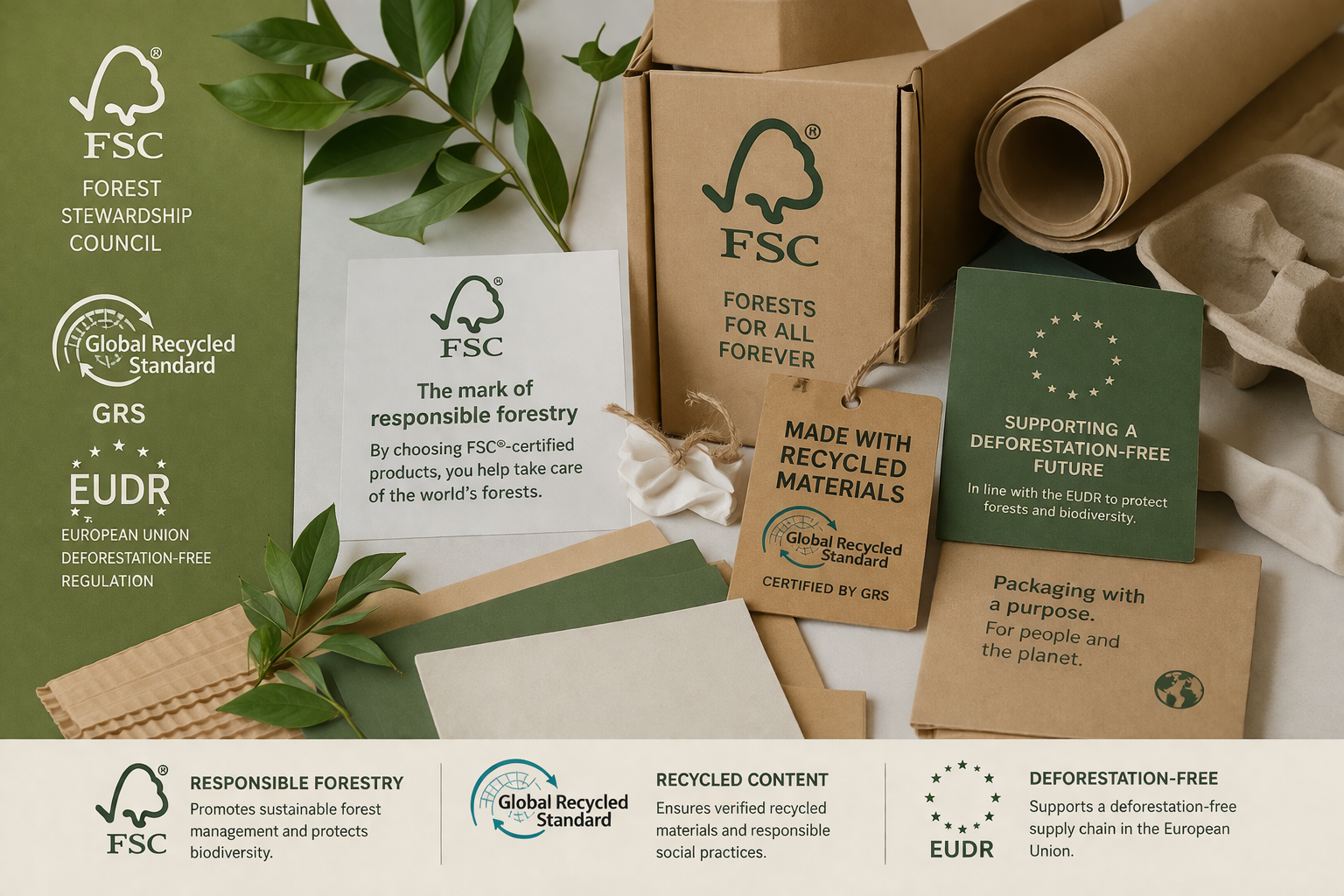
For paper and packaging supply chains, this often brings three frameworks into the discussion: FSC, GRS, and EUDR. FSC chain-of-custody certification is used to verify and track forest-based materials through the supply chain, while GRS covers third-party certification of recycled materials and chain of custody, with additional environmental, social, and chemical-processing requirements and a 50% minimum recycled content threshold under the standard. EUDR, by contrast, is an EU regulation focused on deforestation-free supply chains and due-diligence obligations rather than a product certification claim.
For global brands, the value of sustainable packaging is no longer limited to brand image. It is increasingly connected to procurement standards, customer expectations, internal ESG goals, and market access planning. That is why sustainable packaging solutions need to do more than sound responsible. They need to be credible, supportable, and workable in real packaging development and production.
Why Sustainable Packaging Now Requires More Than a Marketing Claim?
A few years ago, sustainability language in packaging was often broad and promotional. Today, buyers are asking more specific questions. They want to know where fiber-based materials come from, whether recycled content claims are verifiable, and whether packaging partners understand the documentation and traceability expectations affecting global supply chains.
This shift matters because vague sustainability language is no longer enough. Brands increasingly need packaging suppliers that can support responsible sourcing with clearer systems, documented material flows, and more disciplined claim language. FSC chain of custody, for example, is built around tracking certified forest-based materials through sourcing, manufacturing, and distribution. GRS similarly combines recycled-material verification with chain-of-custody requirements, while also adding broader processing-related requirements.
For premium packaging projects, this means sustainability must be handled with the same seriousness as structure, materials, and finishing. It should be integrated into the development process, not added as a final slogan.
What FSC Means for Paper Packaging?
For paper packaging, FSC is one of the most recognized frameworks in discussions around responsible forest-based sourcing. FSC explains chain-of-custody certification as the system used to verify that forest-based materials meeting its standards are credibly tracked along the supply chain, from sourcing through finished goods. FSC also states that, for paper and packaging companies using FSC-certified or controlled forest-based materials, chain-of-custody certification verifies that processes are in place to produce and trade FSC-certified products.
For brands, this matters because FSC-related claims are not only about raw material preference. They are about whether the supply chain can support a credible claim and whether the finished product can be communicated correctly. FSC also notes that certified organizations may use FSC trademarks and labels in accordance with its system requirements.
In practical packaging development, FSC-related sourcing is most valuable when it is handled early. Material choices, claim scope, artwork, and label usage all need alignment before production moves too far forward.
What GRS Means for Recycled Content Packaging?
When brands want to introduce recycled-content packaging, GRS often enters the conversation. Textile Exchange states that the GRS sets criteria for third-party certification of recycled materials and chain of custody, and that it includes a 50% minimum recycled content threshold together with additional social, environmental, and chemical-processing requirements.
That makes GRS relevant for brands that want stronger recycled-content credibility rather than loose environmental language. It also means recycled packaging claims should be handled carefully. A recycled-content message is most credible when the material scope is clear, the claim is supportable, and the supplier understands what part of the packaging is actually covered by the standard claim structure. Textile Exchange also notes that its standards system is transitioning toward the broader Materials Matter framework, which is useful context for brands monitoring how recycled-material standards continue to evolve.
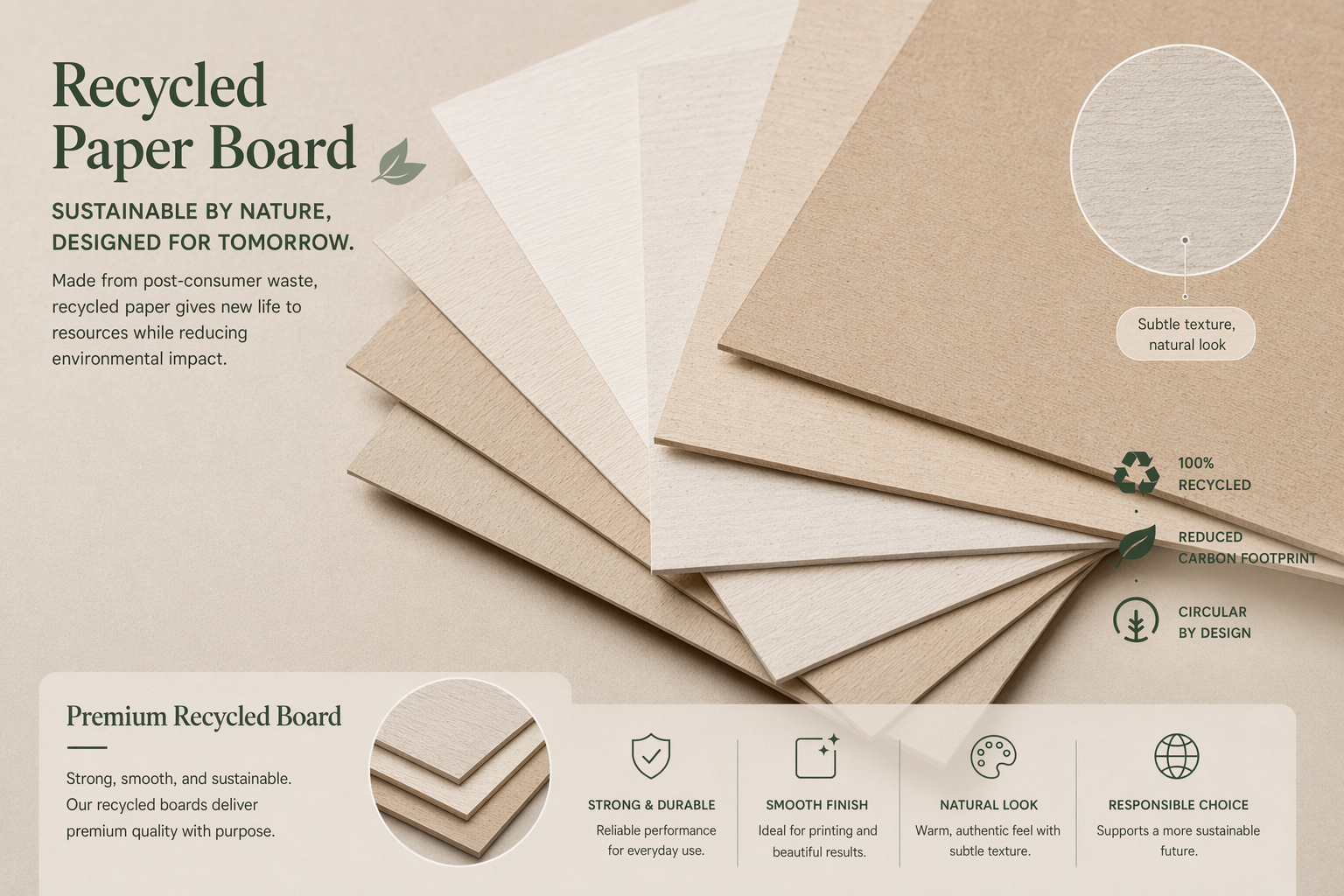
For luxury packaging, the real challenge is balance. Brands want recycled-content options, but they also need visual quality, structural stability, and premium finishing performance. That is why material selection should not be driven by sustainability language alone. It should be evaluated alongside design, converting performance, and final presentation.
What EUDR Means for Brands Using Paper-Based Packaging?
EUDR is often discussed together with FSC and recycled-content standards, but it should not be described in the same way. FSC and GRS are standards-based certification systems; EUDR is an EU legal framework focused on due diligence, traceability, and deforestation-related risk in relevant supply chains. The European Commission's current implementation information reflects a further postponement adopted in December 2025, with application dates set at 30 December 2026 for large and medium operators and 30 June 2027 for micro and small operators, with some specific earlier treatment for certain operators already covered by the EU Timber Regulation.
For brands and packaging suppliers, the practical takeaway is straightforward: EUDR readiness is about documentation discipline, supply-chain visibility, and responsible sourcing processes. It is not something that should be marketed as a simple badge.
That is why the most credible website wording is usually "EUDR-aligned support" or "support for EUDR-related sourcing and traceability expectations" rather than "EUDR certified." This distinction is important for maintaining trust and avoiding overstatement.
Sustainable Packaging Must Still Perform as Premium Packaging
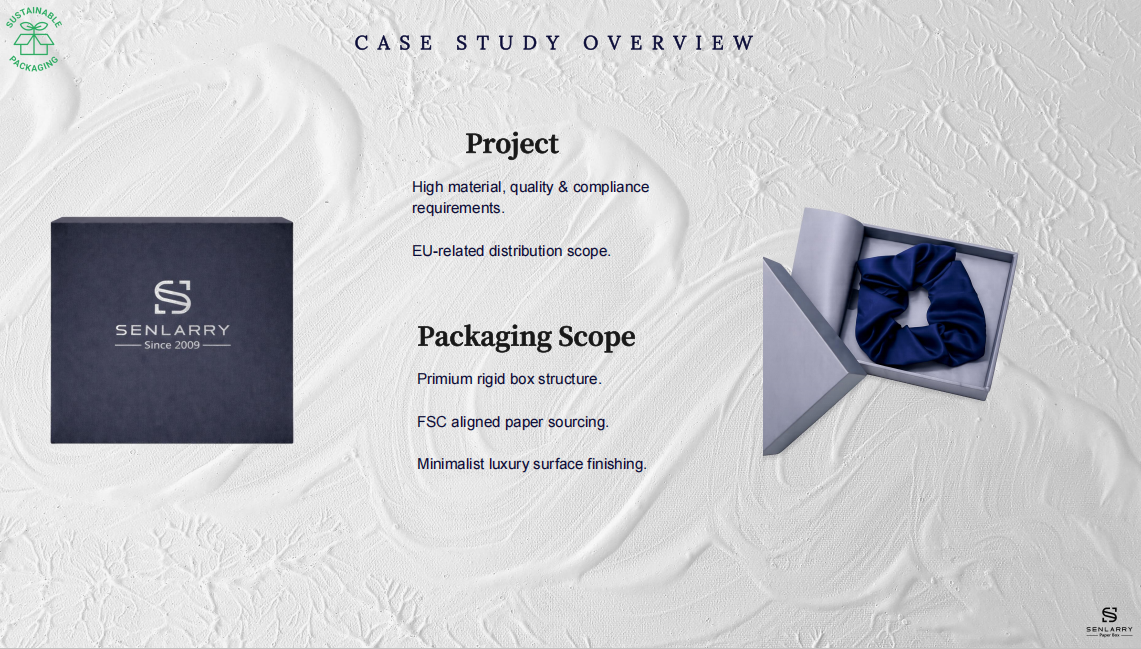
One of the most common mistakes in sustainable packaging discussions is treating sustainability as separate from packaging performance. In reality, beauty and fragrance brands still need packaging to protect the product, express the brand clearly, and deliver a premium customer experience. If the structure feels weak, the finishing looks compromised, or the material choice undermines presentation, the packaging has not truly solved the problem.
This is especially relevant in luxury rigid boxes, premium folding cartons, gift packaging, and limited-edition presentations. Sustainable options need to be evaluated not only for sourcing claims, but also for printability, conversion behavior, finishing compatibility, structural performance, and consistency in production.
For that reason, good sustainable packaging development is rarely about choosing the most aggressive environmental language. It is about making informed material and sourcing decisions while preserving the visual and functional standards the brand requires.
What Global Brands Should Expect from a Sustainable Packaging Partner?
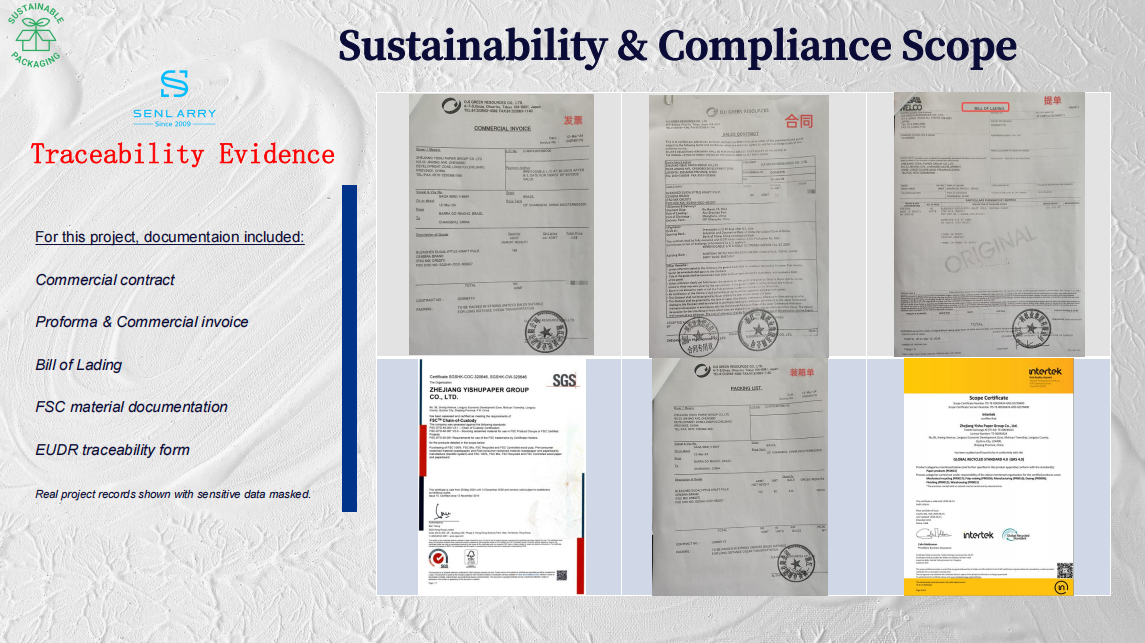
A capable packaging partner should be able to support sustainability in practical terms, not just promotional terms. That means helping brands understand which claims can be made, which materials can support those claims, and how sustainability-related requirements fit into the broader packaging development process.
For global brands, this often includes support in areas such as:
responsible fiber-based material sourcing
recycled-content options where suitable
clearer chain-of-custody awareness
packaging development that balances sustainability with premium appearance
more careful communication around FSC, GRS, and EUDR-related claims
This matters because the strongest sustainability message is usually the most disciplined one. Buyers are more likely to trust a packaging supplier that communicates clearly, avoids exaggeration, and understands the difference between certification-backed claims and regulatory alignment.
Final Thoughts
Sustainable packaging is no longer a side topic for global brands. It is increasingly part of how packaging is sourced, evaluated, approved, and communicated. But sustainability only adds real value when it is handled with credibility and practical execution.
FSC can help support credible forest-based sourcing claims through chain-of-custody systems. GRS can support stronger recycled-content verification with additional processing requirements. EUDR raises the importance of due diligence, traceability, and disciplined sourcing language as regulatory expectations continue to move closer to implementation.
At Senlarry Packaging, we support beauty, fragrance, and premium consumer brands with packaging development that combines design, structure, and material consideration with more responsible sourcing options — including FSC, GRS, and EUDR-aligned support for global packaging projects.
 Hot News

 EN
EN