Yes. Many premium packaging projects come to us before the structure is fully finalized.
We can support your team with structure suggestions, material direction, finishing feasibility, insert design, opening experience, and production-aware adjustments. This helps reduce avoidable changes later in the project.
For brands and design agencies, this is especially important when the creative idea is strong but still needs to be translated into a stable, manufacturable packaging solution.
Yes. Once the structure and size are confirmed, we can provide dielines or structural files for artwork preparation.
For projects that require structure development, we may first create a blank sample or structural prototype to confirm the product fit, opening experience, insert function, and overall structure before final artwork is applied.
This helps designers work with a clearer production foundation instead of guessing from visual references alone.
Yes. We support packaging projects for product launches, influencer kits, seasonal campaigns, retail gift sets, PR presentation kits, and limited-edition collections.
These projects usually require stronger attention to visual impact, opening experience, timeline control, and presentation details.
We recommend involving us as early as possible so structure, material, finishing, and packing methods can be reviewed before production begins.
To quote accurately, we usually need the box type, size, material preference, printing requirements, finishing details, insert structure, quantity, shipping destination, and any special requirements such as FSC? paper, GRS-related material considerations, magnets, ribbons, windows, embossing, foil stamping, or special paper.
If you already have dielines, artwork, reference images, or a physical sample, the quotation can be more accurate.
For early-stage projects, we can also provide a preliminary estimate based on the concept. The final price should be confirmed after the structure, materials, finishing details, and quantity are clear.
A beautiful sample is not enough. For premium packaging projects, the real challenge is keeping the approved look, structure, color, finish, and overall feel stable during mass production.
At Senlarry Packaging, we manage this through controlled sampling records, confirmed material specifications, color references, finishing standards, and production checkpoints before bulk production moves forward.
Our goal is not only to make the sample look right, but to make sure the final delivery stays aligned with what your brand approved.
Yes. Premium brands often have strict requirements for color, texture, logo placement, finishing effects, and overall visual consistency.
We can work with Pantone references, printed color targets, material samples, artwork files, structural drawings, and approved brand standards. For projects with high color sensitivity, we recommend confirming physical proofs rather than relying only on screen previews.
Luxury packaging depends heavily on subtle details. A small color shift, uneven foil, weak embossing, poor alignment, or unstable material texture can affect the perceived value of the product.
We take quality issues seriously and review them based on clear evidence, approved standards, production records, and shipment conditions.
If an issue is confirmed to be related to our production responsibility, we will work with the client to provide a practical solution. Depending on the case, this may include replacement, rework, sorting, or another agreed corrective action.
More importantly, we use quality feedback to improve future production control and reduce repeat problems.
Packaging must look good when it leaves the factory, but it also needs to arrive in usable condition.
We consider material thickness, structure strength, insert support, edge protection, surface finish durability, packing method, carton arrangement, and export handling requirements.
This is especially important for rigid boxes, gift sets, PR kits, fragrance packaging, and packaging with delicate finishes or special surfaces.
Sampling time depends on the box structure, material, and finishing complexity.
For many standard structures, samples can usually be developed within a shorter timeframe(3-7days). Complex rigid boxes, custom inserts, multi-material structures, or special finishing effects may require more testing.
Mass production lead time is confirmed after sample approval, final artwork, material availability, order quantity, and packing requirements are clear.(15-30days)
For time-sensitive launches or seasonal projects, we recommend involving us early so we can help identify production risks before they affect the timeline.
Yes. MOQ depends on the packaging type, material, printing method, finishing process, and order complexity. (normally 1000pcs)
Rigid boxes, special papers, custom inserts, multi-material structures, and highly customized packaging usually require higher production quantities than simple folding cartons.
If your project is still in an early stage, you can share your estimated quantity and target use. We can help evaluate whether the structure is suitable for your volume, or suggest a more practical alternative.
Yes. Cost optimization does not always mean simplifying the design or weakening the brand experience.
Sometimes it means choosing a more suitable paper, adjusting the structure, reducing unnecessary assembly steps, changing the insert method, improving material usage, or selecting a finishing process that delivers a similar visual effect with better production efficiency.
Our role is to help protect the brand presentation while making the project more practical for production, budget, and long-term supply.
Yes. For confidential packaging projects, new product launches, limited editions, or agency-led concepts, we can work under NDA before receiving sensitive files, artwork, or product information.
We understand that packaging often appears before a product launch, so confidentiality is part of professional project handling.
Yes. We can support projects that require FSC, paper options, GRS-related material considerations, and sourcing discussions related to EUDR compliance awareness.
For premium brands, sustainability is no longer just a logo on the box. It involves material selection, traceability, responsible sourcing, recyclability considerations, and how these choices affect the final packaging experience.
We can help your team evaluate more responsible material options while keeping the packaging aligned with your brand positioning and product requirements.
We are best suited for custom paper packaging projects where brand presentation, structure, finishing, and production consistency matter.
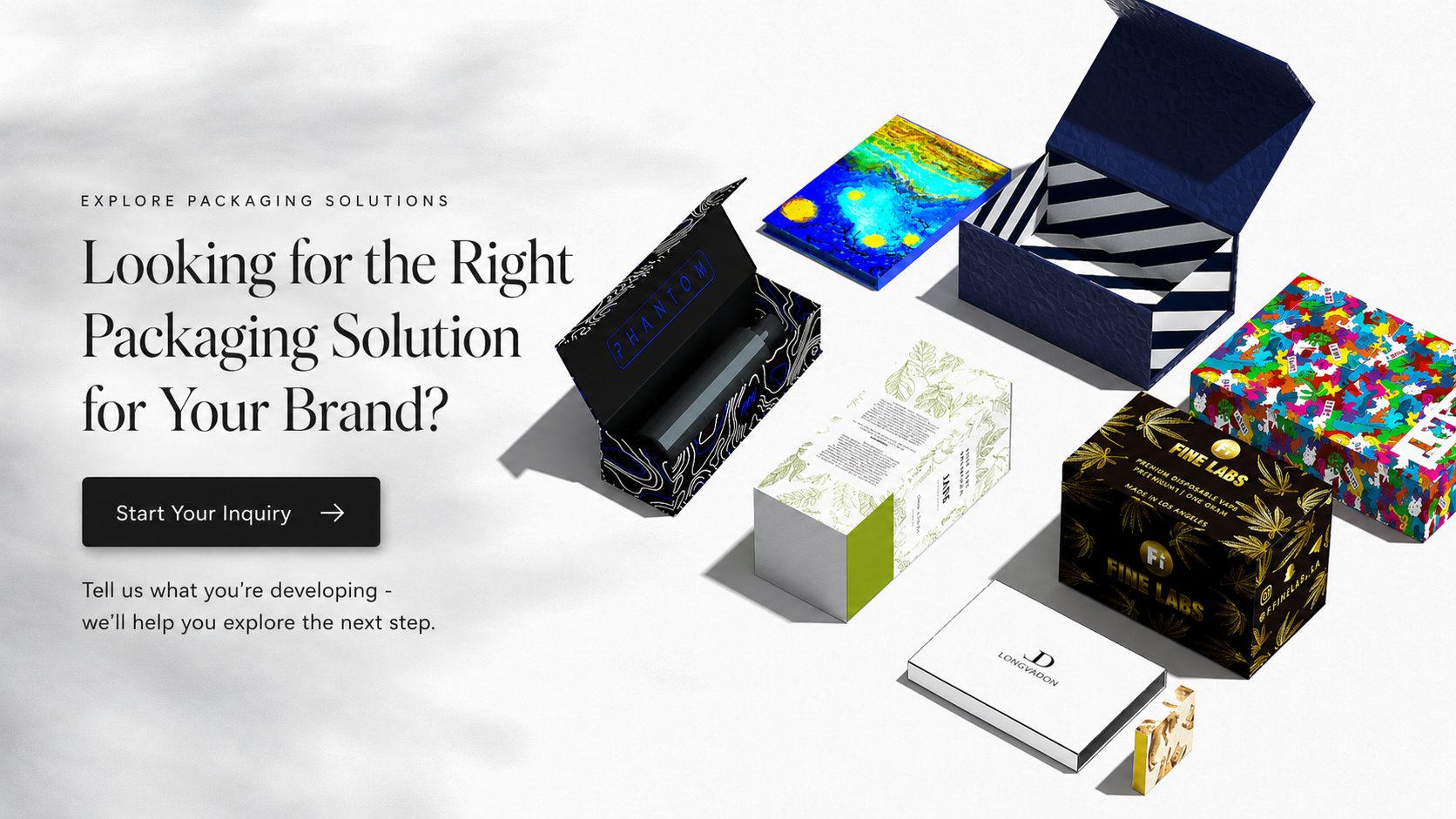
Typical projects include rigid boxes, folding cartons, drawer boxes, book-style boxes, magnetic closure boxes, gift set packaging, PR kits, fragrance packaging, beauty packaging, skincare packaging, premium electronics packaging, wine and spirits packaging, and seasonal or limited-edition packaging.
We are not the best fit for customers looking for generic stock boxes or the lowest possible unit price without concern for design, finish, or brand experience.

 EN
EN